- Chili Pepper Seedling Growth: What to Do After Germination?
- The First Days After Germination
- Light: Essential for Strong Seedlings
- Ideal Temperature for Young Seedlings
- Watering Young Seedlings Correctly
- Should You Remove the Mini-Greenhouse Cover?
- When to Transplant Young Seedlings?
- How to Successfully Transplant Seedlings?
- When to Start Fertilizing?
- Should You Rotate the Seedlings?
- Acclimating Seedlings Before Moving Outdoors
- Common Mistakes
- FAQ: Frequently Asked Questions
- Conclusion
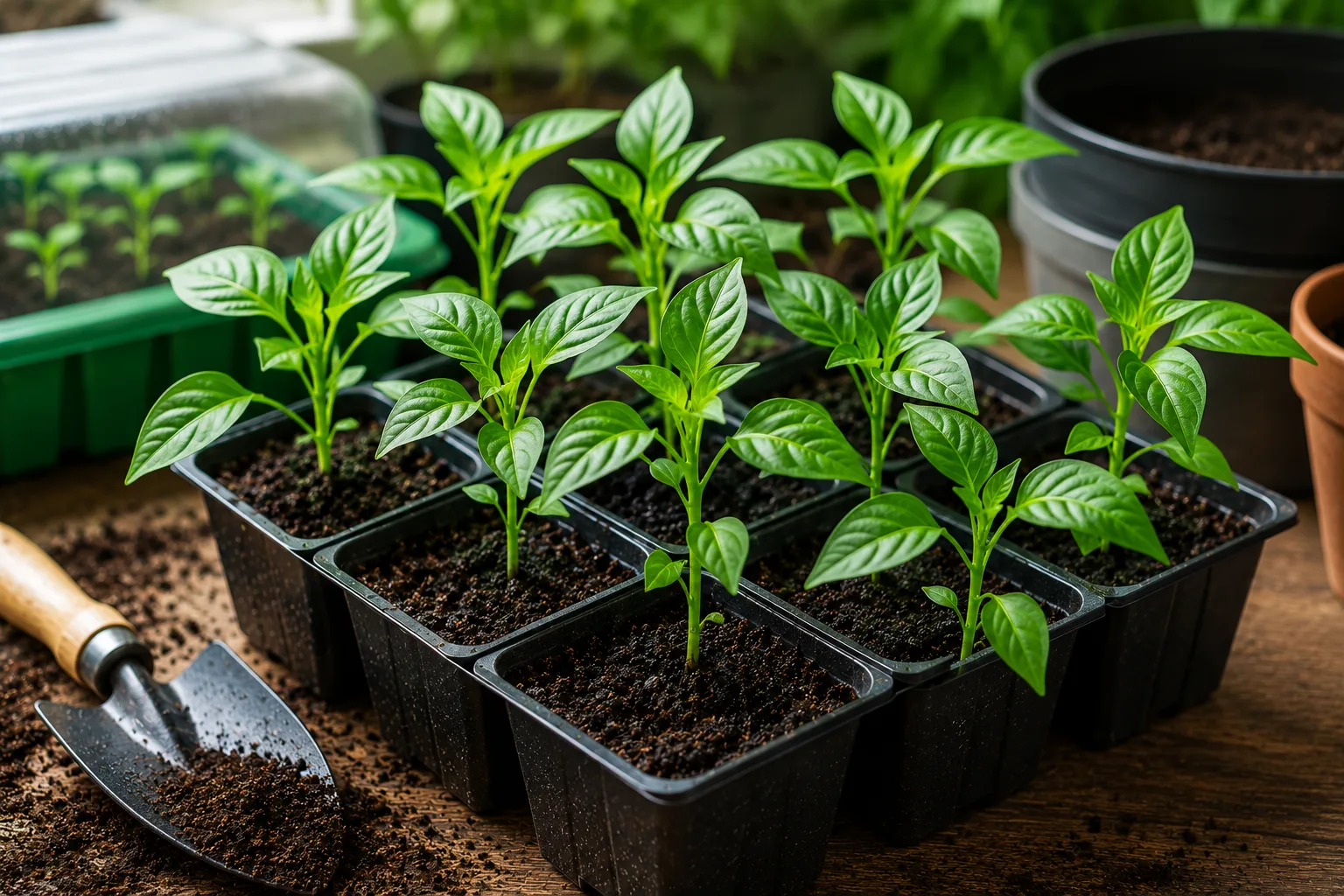
Chili Pepper Seedling Growth: What to Do After Germination?
The first seeds have germinated, young shoots are appearing… congratulations, your chili pepper seedlings are a success!
But this stage is also one of the most delicate. Young seedlings remain fragile for several weeks and require suitable conditions to grow strong, compact, and productive.
In this guide, we’ll explore how to support the growth of young chili pepper seedlings after germination: light, temperature, watering, transplanting, fertilization, acclimatization, and common mistakes to avoid.
The First Days After Germination
Once the seeds have germinated, the needs of the seedlings change rapidly.
During the germination phase, warmth was the priority. Now, light becomes the most important factor.
What to Do Immediately
- Place the young seedlings in a very bright location
- Slightly reduce excessive humidity
- Maintain a stable temperature
- Monitor watering
A young seedling lacking light will quickly become weak and leggy.
Light: Essential for Strong Seedlings
Young chili peppers need plenty of light to develop thick stems and dense foliage.
Symptoms of Light Deficiency
- Long, thin stems
- Seedlings leaning to one side
- Pale leaves
- Slow growth
This phenomenon is often called "leggy" seedlings.
Recommended Solutions
Natural Light
A very bright south- or southwest-facing window may suffice in some cases.
However, in winter or early spring, natural light is often insufficient.
LED Grow Lights
Grow lights provide:
- Faster growth
- More compact seedlings
- Better foliage color
- Reduced risk of weak seedlings
Distance Between Light and Seedlings
| Light Type | Recommended Distance |
|---|---|
| LED Grow Light | 20 to 40 cm |
| Fluorescent Grow Light | 10 to 20 cm |
Light Duration
Young seedlings generally thrive with:
- 12 to 16 hours of light per day
Too little light significantly slows down seedling development.
Ideal Temperature for Young Seedlings
After germination, chili peppers still appreciate warmth, but slightly lower temperatures can strengthen the seedlings.
Recommended Temperatures
| Time | Ideal Temperature |
|---|---|
| Daytime | 20 to 26°C |
| Nighttime | 16 to 20°C |
A slight difference between day and night temperatures helps seedlings develop properly.
Watering Young Seedlings Correctly
Watering remains a sensitive issue throughout the growth of young seedlings.
Best Practices
- Water moderately
- Allow the substrate surface to dry slightly
- Avoid stagnant water
- Use drained containers
Signs of Underwatering
- Wilting leaves
- Slowed growth
- Dropping leaves
Signs of Overwatering
- Yellowing leaves
- Fragile stems
- Mold
- Stunted growth
It’s better to slightly underwater than to keep the substrate constantly soggy.
Should You Remove the Mini-Greenhouse Cover?
Yes, gradually.
Excessive humidity after germination can encourage:
- Mold
- Damping-off disease
- Fungal infections
Recommended Method
- Gradually open the vents
- Remove the cover for a few hours a day
- Completely remove the greenhouse after a few days
Young seedlings need fresh air to strengthen.
When to Transplant Young Seedlings?
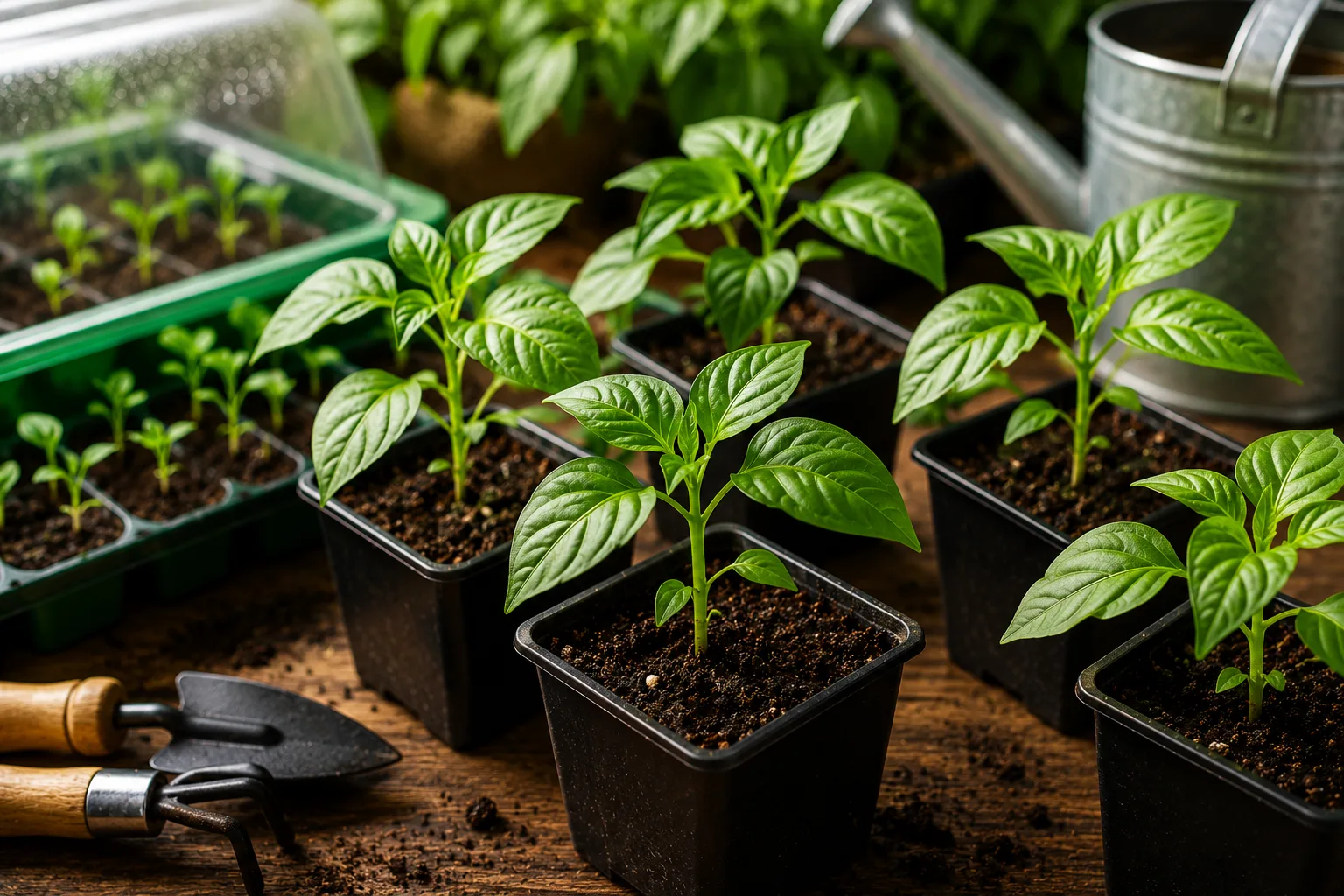
Transplanting involves moving seedlings to a larger container.
This step becomes necessary when:
- Several true leaves appear
- Roots start filling the current container
- Seedlings become crowded
Recommended Pot Sizes
| Stage | Approximate Size |
|---|---|
| Young Seedling | 7 to 9 cm |
| Intermediate Growth | 1 to 3 liters |
| Final Pot | 5 to 20 liters (depending on variety) |
How to Successfully Transplant Seedlings?
Step 1: Prepare the New Pot
Use a light, well-draining substrate.
The mix can be slightly richer than the one used for sowing.
Step 2: Moisten Slightly
A slightly moist substrate makes transplanting easier.
Step 3: Handle with Care
Hold the seedling by the leaves rather than the stem.
Young stems are very fragile.
Step 4: Bury the Stem Slightly
You can bury a small part of the stem to improve the seedling’s stability.
Step 5: Recovery After Transplanting
After transplanting:
- Avoid direct sunlight for 24 to 48 hours
- Maintain good humidity
- Minimize stress
A slight slowdown in growth after transplanting is normal.
When to Start Fertilizing?
Young seedlings generally do not need fertilizer immediately.
The substrate often contains enough nutrients for the first few weeks.
When to Fertilize?
Fertilizer becomes useful when:
- Several true leaves are present
- Growth slows down
- The seedling starts running out of space
Tips
- Start with low doses
- Use a balanced fertilizer
- Avoid excess nitrogen
Too much fertilizer can burn young roots.
Should You Rotate the Seedlings?
Yes, especially if using a window as a light source.
Seedlings naturally grow toward the light.
Why Rotate the Pots?
- Achieve more even growth
- Prevent leaning stems
- Strengthen the seedling’s structure
A quarter turn every 1 to 2 days is often sufficient.
Acclimating Seedlings Before Moving Outdoors
Before placing seedlings outside, they must gradually adapt to outdoor conditions.
This process is called hardening off.
Why Is It Important?
A sudden move outdoors can cause:
- Leaf burn
- Growth arrest
- Significant stress
- Stem breakage
Gradual Method
Days 1 to 3
- 1 to 2 hours outdoors
- Light shade
- No strong wind
Days 4 to 7
- Gradually increase exposure
- Introduce some sunlight
- Leave outdoors for longer periods
After One Week
Seedlings are usually ready to stay outdoors if temperatures are suitable.
Avoid taking peppers outside if nighttime temperatures drop below 10 to 12°C.
Common Mistakes
Moving Seedlings Outdoors Too Early
Cold temperatures can severely slow down or even kill chili peppers.
Overwatering
Excess moisture is the most common mistake.
Lack of Light
Weak seedlings early on often remain less productive later.
Using a Pot That’s Too Large Immediately
Excess moist substrate can slow root development.
Over-Fertilizing
Young seedlings are sensitive to nutrient excess.
FAQ: Frequently Asked Questions
Why Are My Chili Pepper Seedlings Very Thin?
Lack of light is usually the main cause.
When Can Young Seedlings Be Moved Outdoors?
When nighttime temperatures consistently stay above 10 to 12°C.
Can Seedlings Stay Behind a Window?
Yes, but a grow light often yields better results.
Why Are the Leaves Turning Yellow?
Possible causes include:
- Overwatering
- Nutrient deficiency
- Cold temperatures
- Poor drainage
Conclusion
After germination, young chili pepper seedlings primarily need light, moderate warmth, and well-controlled watering.
This period is crucial for producing robust seedlings capable of yielding a bountiful harvest a few months later.
The next steps will be final repotting, caring for mature plants, and the appearance of the first flowers and peppers.